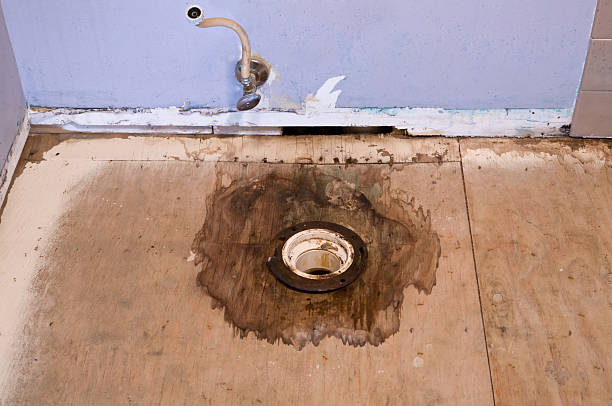
Not all water damage is created equal. When a toilet overflows or a sewer main backs up, you are dealing with a biohazard. This is known as Category 3 water damage—grossly unsanitary water containing pathogens, bacteria, and viruses. We are your local Roaring Spring, PA experts in hazardous cleanup. We possess the training, the PPE, and the chemical protocols to safely handle sewage cleanup and sanitizing services.
Call 24/7: Get an Immediate Crew On-Site
Attempting to clean up sewage yourself puts your health at severe risk. Hepatitis, E. coli, and Salmonella can live in sewage-contaminated porous materials for weeks. We provide toilet backup sewage removal in basements and bathrooms using full hazmat protocols. We isolate the affected area to prevent airborne contamination and remove all porous materials (carpet, pad, drywall) that have touched the sewage, as they cannot be safely salvaged.
Once the physical sewage is removed, the real work begins. We pressure wash the structure with hot water and apply hospital-grade disinfectants. We treat the area to ensure that no bacteria remain. We also address the smell—sewage incidents leave a distinct, foul odor. Our air scrubbers and hydroxyl generators neutralize these odors at the molecular level, ensuring your home smells fresh and safe again.
Handling raw sewage requires adherence to strict disposal laws. We ensure that all contaminated waste is bagged, sealed, and disposed of according to Roaring Spring, PA and federal environmental regulations. You don't have to worry about the mess; we handle the dirty work so you don't have to.
Call 24/7: Get an Immediate Crew On-Site
This is not a DIY project. Protect your family's health by calling the certified experts to handle sewage and biohazard spills safely and discreetly.
"A nightmare scenario—our septic backed up into the shower and floor. These guys suited up in white suits and cleaned it perfectly. No smell left behind."
"Fast and respectful. They understood how stressful it was to have sewage in the basement. They cleaned it up and cut out the wet drywall neatly."
"I didn't know who to call for a toilet explosion. They handled the cleanup and the sanitizing. Very professional."
Roaring Spring was established around the Big Spring in Morrison's Cove, a clean and dependable water source vital to the operation of a paper mill. Prior to 1866, when the first paper mill was built, Roaring Spring had been a grist mill hamlet with a country store at the intersection of two rural roads that lead to the mill near the spring. A grist mill, powered by the spring water, had operated at that location since at least the 1760s. After 1867, as the paper mill expanded, surrounding tracts of land were acquired to accommodate housing development for new workers. The formalization of a town plan, however, never occurred. As a result, the seemingly random street pattern of the historic district is the product of hilly topography, a small network of pre-existing country roads that converged near the Big Spring, and the property lines of adjacent tracts that were acquired through the years for community expansion. The arterial streets of the district are now East Main, West Main, Spang and Bloomfield, each of which leads out of the borough to surrounding townships. Two of these streets — Spang and East Main — meet with Church Street at the district's main intersection called "Five Points." The boundaries of the district essentially include those portions of Roaring Spring Borough which had been laid out for development by the early 1920s. This area encompasses 233 acres (0.94 km2) or 55 percent of the borough's area of 421 acres (1.70 km2). Since the district's period of significance extends to 1944, most of those buildings erected after the 1920s were built as infill within the areas already subdivided by the 1920s. In the early 1960s, the borough began to annex sections of adjacent Taylor Township, especially to the east around the then new Rt. 36 Bypass.
Zip Codes in Roaring Spring, PA that we also serve: 16673